
If your home coffee still tastes inconsistent, a few brewing basics can make your daily cup more reliable. This guide walks through grind size, pour over setup, French press timing, water temperature, and simple bean storage habits so your morning routine feels both clear and repeatable.
Getting Started with Home Coffee Brewing Basics
Home coffee brewing basics start with understanding that a good cup comes from a few simple elements working together. The beans you choose, how fresh they are, and how you store them shape flavor before you even begin brewing. From there, grind size, water quality, temperature, and contact time between water and coffee determine how much sweetness, bitterness, and aroma end up in your mug. Even a modest setup at home can produce consistent, enjoyable results once you see how each of these variables affects taste.
As you develop a steady morning brewing routine, it helps to treat your coffee like a small, repeatable experiment. Pick one brewing method, such as a dripper or a press, and keep your recipe the same for a few days. Change only one thing at a time, like grind or timing, and notice how the flavor shifts. This chapter gives you a clear view of the core tools and techniques so you can brew with confidence and make gradual, informed improvements instead of guessing.
Choosing and Storing Your Coffee Beans
For home coffee brewing, your beans are the starting point. Choose whole beans roasted within the last few weeks, and match the roast level to how you like to drink your coffee: lighter roasts for brighter, tea-like cups and darker roasts for a deeper, more robust taste. If you enjoy pour over, a medium roast often gives a balanced flavor that works well with paper filters, while French press can suit a range from medium to dark. Reading the tasting notes on the bag helps you see whether the coffee leans fruity, nutty, or chocolatey, so your daily cup stays consistent without extra trial and error every morning.
Good bean storage focuses on keeping out air, light, heat, and moisture, which all dull flavor over time. Store beans in an opaque, airtight container at room temperature, and avoid leaving the bag open or placing it near the stove. Instead of pre-grinding a large batch, grind only what you need for each brew to preserve aroma and sweetness, and measure your usual dose the night before to simplify your morning brewing routine. With mindful storage and a small, predictable setup, you wake up to beans that stay fresh, easy to use, and ready for a reliable cup without extra hassle.
| Storage Habit | Freshness Impact | Morning Routine Effect | Recommendation |
|---|---|---|---|
| Opaque, airtight container at room temperature | High flavor protection | Predictable, consistent cup | Strongly recommended |
| Leaving bag open on counter | Rapid aroma loss | Inconsistent daily taste | Avoid when possible |
| Storing near stove or warm window | Heat dulls flavor | More guesswork each brew | Not recommended |
| Grinding only before brewing | Retains aroma and sweetness | Smoother, simpler routine | Preferred habit |
| Pre‑grinding large batch | Gradual staling | Convenient but less flavor | Use with caution |
Practical Bean Storage Tips at Home
Treat coffee beans like a fresh pantry ingredient. For practical bean storage tips, keep whole beans in an opaque, airtight container so light, oxygen, heat, and moisture cannot dull the flavor. Store the canister in a cool, dry cupboard away from the stove or sunny windows to support a steady morning brewing routine. Buy only what you will use in two to four weeks, or divide larger bags into several small containers and open them one at a time so each portion stays fresh longer; avoid freezing and refreezing daily‑use beans, and keep any sealed backup stash in the freezer untouched until you move it into your regular storage.
Grind Size and Water Temperature Basics
In home coffee brewing, grind size and water temperature work together to control extraction, the amount of flavor pulled from the beans. Smaller particles and hotter water speed extraction, while coarser grinds and cooler water slow it down. When these two factors are in balance, the cup tastes clear, sweet, and even, instead of sour or harsh. Watching both elements is a practical way to master home coffee brewing basics across different methods.
A simple grind size guide starts by matching grind texture to brew time. Very fine, almost powdery coffee suits short, intense brews that finish in under a minute, while common pour over brewers usually prefer a medium grind that feels like table salt. For methods that immerse the grounds for several minutes, such as a press-style brewer, a coarser grind, closer to kosher salt, helps avoid overextraction and a muddy feel. Within these ranges, small shifts let you fine-tune flavor: if the cup tastes sharp and thin, go a bit finer; if it is bitter and heavy, move slightly coarser.
Water temperature basics matter just as much as grind size because heat changes how quickly flavors dissolve. Water just off the boil, usually in the mid to high 190s Fahrenheit, is a solid starting point for most pour overs and press brewers. Slightly cooler water can calm sharp acidity in lighter roasts, while slightly hotter water can enhance sweetness and body in dense beans. Using a steady temperature makes it easier to tell whether flavor changes come from grind adjustments or from heat, and helps you build a consistent home routine.
A Simple Grind Size Guide for Popular Methods
In home coffee brewing, grind size controls how quickly water pulls flavor from the beans. For pour over brewers, a medium grind like coarse sand usually gives a balanced cup because water flows steadily without racing through or getting stuck. Automatic drip machines often like a similar grind, so you can usually keep one shared setting and then tweak slightly based on taste.
For immersion methods such as a French press, switch to a coarser grind, closer to sea salt, to match the longer contact time between coffee and water and support careful French press timing. Many home brewers start around four minutes, then go a bit finer if the coffee tastes weak or slightly coarser if it seems harsh. Matching each device with a simple grind range creates a repeatable guide for daily brewing.
Dialing In Your Pour Over Setup
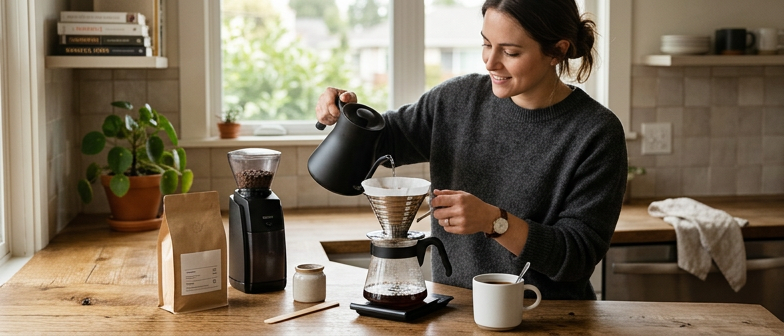
A simple pour over setup lets you highlight the flavors of freshly ground coffee at home without much equipment. Use a cone dripper with a paper filter and a sturdy mug or carafe, and add a scale if you want repeatable results. Rinse the paper with hot water to warm the brewer and remove any papery taste, then add medium-fine grounds and gently shake so the bed is level. As a starting point, use about one part coffee to fifteen or sixteen parts water by weight and adjust this ratio to suit your taste.
Water temperature is one of the most important basics for pour over brewing, so use water just off the boil, around 195 to 205 degrees Fahrenheit. Start with a small pour to wet all the grounds and let them bloom for about thirty seconds, then pour in slow circles, keeping the level steady instead of filling the cone at once. A full brew usually finishes in about three to four minutes, and you can tweak grind size, pour speed, or temperature to control how fast it drains and how the cup tastes. When you find a combination that gives you a balanced, sweet cup, note your timing so your morning brewing routine stays consistent and easy.
Q&A
What are the core basics of brewing better coffee at home?
Focus on fresh beans, the right grind size, clean water, stable water temperature, and suitable brew time. Adjust only one variable at a time so you can tell what changes the taste.How does grind size affect extraction for different brewers?
Finer grinds slow water and increase extraction, while coarser grinds speed flow and extract less. Use medium for most pour overs, medium for many drip machines, and coarse for French press.What is a simple pour over setup for consistent results?
Use a cone dripper with a rinsed paper filter, freshly ground medium coffee, and a kettle. Start with about 1 gram of coffee to 15–16 grams of water and pour slowly in stages.How long should I steep French press coffee?
A common starting point is 4 minutes with coarse grounds and water just off the boil. If it tastes sharp, extend the time slightly; if it is harsh or bitter, shorten the steep.What are practical bean storage tips for a morning routine?
Store whole beans in an opaque, airtight container in a cool, dry cupboard. Buy small amounts, keep backup bags sealed, and grind only what you need right before brewing each morning.