
If your closet feels full but nothing works together, capsule wardrobe planning can restore order. This guide shows how to define essential basics, use neutral pairings, rotate clothes by season, and build consistent outfits that suit your real routine while saving space.
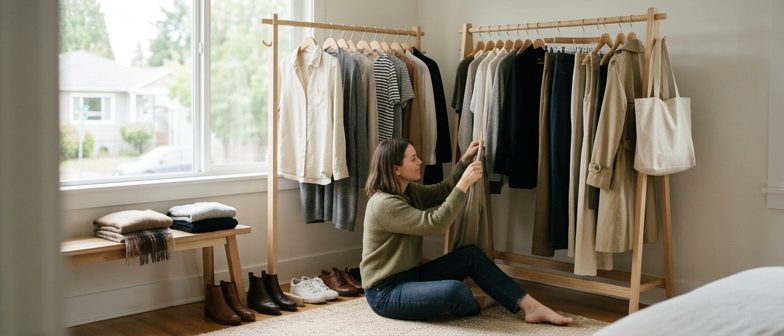
What a Capsule Wardrobe Really Is
A capsule wardrobe is a small, deliberately chosen set of clothes that can be mixed and matched in many ways, so getting dressed feels simpler and faster. Instead of chasing every trend, capsule wardrobe planning focuses on pieces you actually wear, usually built around a limited color palette and a few familiar silhouettes. The aim is not to overhaul your personality or force a strict uniform, but to create a dependable group of outfits that fits your routine and cuts down daily decisions. It also helps you see what is missing in your closet and make more intentional shopping choices.
At the center of this approach is personal style consistency, not restriction. Your capsule should reflect what you genuinely like, what fits you well, and what suits your everyday activities, whether that is jeans and T-shirts, tailored pieces, or a mix of both. Over time you may notice patterns in colors, fabrics, and shapes you repeat, and those patterns can guide you as you refine or expand your capsule, treating your clothes as a coherent system rather than a random pile.
Clarifying Your Lifestyle and Style Needs
Clarifying how you actually live is one of the most practical starting points for capsule wardrobe planning. Instead of imagining an ideal week, look at your real schedule: how many days you spend at work, at home, commuting, exercising, or going out. Note any dress codes you must respect, from business casual to uniforms or safety gear, and how often you truly attend special events. Climate and seasonal shifts also matter, because a compact wardrobe has to handle temperature changes, travel, and occasional bad weather without adding clutter. When you map your days and conditions honestly, it becomes easier to see which types of clothing deserve the most space and which pieces can remain optional.
Once your lifestyle picture is clear, you can focus on personal style consistency so your smaller wardrobe still feels like you. Pay attention to the colors, silhouettes, and fabrics you reach for repeatedly, and use those habits to guide which essentials you keep and which you can let go. A capsule wardrobe planning process that centers your genuine preferences makes it easier for every item to work in several outfits rather than becoming a one-time experiment. Over time, this alignment between daily life and style choices creates a cohesive closet where each piece supports your routines, expresses your taste, and makes getting dressed feel straightforward instead of stressful.
| Weekly Scenario | Core Clothing Category | Suggested Piece Range | Style Consistency Notes |
|---|---|---|---|
| Office-heavy weekdays | Business casual separates | Moderate set of mixable tops and bottoms | Stick to neutral bases with familiar silhouettes |
| Hybrid work and home | Smart casual layers | Small rotation of jeans, chinos, light knits | Repeat favorite colors for easy pairing |
| Active mornings or evenings | Workout and athleisure | Lean selection of tops, leggings, outer layers | Choose fabrics you already reach for often |
| Social evenings and weekends | Polished casual outfits | Limited number of versatile dresses or shirts | Coordinate with your everyday neutral palette |
| Travel or variable climate days | Layering-friendly pieces | Compact mix of outerwear and mid-layers | Prioritize items that blend with your core wardrobe |
Translating Your Routine into Clothing Categories
Begin your capsule wardrobe planning by mapping a typical week rather than starting with trend lists. Note how many days you spend at work, at home, running errands, exercising, or going out, and then translate those patterns into broad clothing categories such as office outfits, casual home wear, active pieces, and social looks. This routine-first approach keeps your capsule focused on how you actually live, so every item feels intentional and supports long-term personal style consistency instead of random purchases.
Choosing Essential Basics and Neutral Pairings
When you plan a capsule wardrobe, start by defining a small set of essential basics that support most of your routine. Look at what you wear in a typical week, then keep the core pieces that make those outfits work, such as well-fitting jeans, tailored trousers, simple T-shirts, button-down shirts, and one or two versatile dresses or skirts. Prioritize quality fabrics, comfortable fits, and cuts that flatter you, because these items will be in heavy rotation and form the base of most outfits.
After you know your essentials, use neutral outfit pairing to make everything mix and match easily. Choose a limited range of base colors like black, navy, gray, beige, or white so tops, bottoms, and layers naturally coordinate. If most of your trousers are navy and black, choose shirts and lightweight knits that suit both shades instead of buying pieces that only match one item. This neutral framework keeps your capsule low-stress to wear while still leaving room for a few accent colors or patterns.
Layering strategy is what helps these basics work in different temperatures and situations. Combine lightweight tops with mid-weight sweaters or cardigans, plus one or two jackets or blazers you can wear open or closed. Thinner layers are easier to stack than a single bulky piece, so you can adjust from cool offices to chilly evenings without changing your whole look. When your layers stay within your neutral palette, you can add or remove pieces freely and still keep a consistent personal style.
Building a Core Palette with Neutrals
A neutral-based color palette is one of the most practical tools for capsule wardrobe planning because it keeps outfits flexible without feeling repetitive. Choose two or three core neutrals that fit your personal style, such as black and gray for a sharper look or camel and ivory for a softer mood. Let these tones anchor your everyday pieces so most items can be mixed and matched easily, reducing single-use garments that do not coordinate with the rest of your clothes.
After setting this foundation, add one or two accent shades you enjoy wearing and that blend smoothly with your chosen neutrals, such as muted blue, forest green, or warm rust. Use these colors in smaller pieces like tops, scarves, or a casual blazer to create variety while keeping your outfits visually cohesive. This limited palette supports consistent styling and acts as a filter for new purchases, making it easier to maintain a streamlined, reliable wardrobe.
Seasonal Rotation and Layering Strategy
Seasonal clothing rotation keeps a capsule wardrobe manageable and prevents an overcrowded closet. At the start of each season, pull everything out and decide what matches the weather ahead, what you wore often, and what stayed in the back. Everyday warm‑weather pieces like light tees, linen garments, and sandals move into prime space in spring and summer, while heavier sweaters, wool trousers, and boots shift to labeled bins, under‑bed boxes, or high shelves. This simple swap keeps only the most relevant garments within reach, supports closet space saving, and shows how many options you have before adding anything new.
A clear layering strategy helps a compact wardrobe work in most temperatures without buying many extras. Start with breathable base layers such as cotton tees or thin turtlenecks, add mid‑layers like cardigans or light sweaters, and finish with outer layers such as blazers or coats that suit your climate. Choose pieces that slide over each other comfortably so you can adjust warmth as temperatures change through the day and between seasons. When most layers share a neutral color palette and similar silhouettes, they pair easily in different ways, extending each item’s use and keeping your capsule wardrobe planning consistent with shifting weather and limited storage.
Q&A
What is capsule wardrobe planning?
It is building a small, intentional set of mix‑and‑match clothes around your routine, color palette, and preferred silhouettes, not just owning fewer items.How do I make sure my capsule fits my real lifestyle?
Track a typical week, note how often you work, commute, relax, or exercise, list dress codes and climate needs, then assign clothing categories to match those patterns.Which essential basics should I start with?
Prioritize well‑fitting jeans, tailored trousers, neutral T‑shirts, a button‑down shirt, and one or two versatile dresses or skirts that suit several settings.How do neutral outfits support personal style and variety?
A base of black, navy, gray, or camel helps most tops, bottoms, and layers pair easily while still letting you add a few accent colors or prints.What simple rotation and layering strategy saves closet space?
Keep current‑season clothes at eye level, store off‑season items in labeled boxes, and rely on layers like cardigans, light sweaters, and jackets to cover more temperatures with fewer pieces.