
Minimalist home organization helps small apartments feel calmer by matching storage to daily routines rather than chasing empty surfaces. This guide walks through practical layouts, entryway systems, and kitchen drawer setups, plus simple decluttering rules that prevent clutter from building up again.
Foundations of Minimalist Home Organization
Minimalist home organization focuses on designing a home that supports how you actually live, not just owning fewer things. Instead of chasing an empty, picture-perfect space, it asks how well each room functions, how easily you find what you need, and how smoothly daily tasks happen. It blends intentional storage, clear surfaces, and calm visual lines with the real needs of work, hobbies, and rest. The aim is to build a flexible framework that helps you decide what stays, where it belongs, and how it will be used over time, so your space feels intentional rather than bare.
A practical minimalist system rests on two pillars: clutter prevention habits and simple decluttering decision rules. Prevention habits are small routines that stop piles from forming, such as pausing before bringing something home, resetting shared areas daily, and giving every type of item a consistent storage spot. Decision rules guide what you keep, asking whether something is used regularly, needed for safety or work, or genuinely adds comfort or meaning. When everyday routines and clear criteria work together, minimalist home organization becomes sustainable and reduces the need for repeated major clean-outs.
Designing a Small Apartment Layout that Supports Minimalism
A minimalist home organization plan for a small apartment starts with how you map out the space, not with buying more storage. Identify the primary activities in each area, such as sleeping, working, relaxing, and eating, and give every zone one clear purpose. When each section has a defined role, it becomes easier to decide what belongs and what does not, which naturally limits visual and physical clutter.
Furniture placement shapes how calm and functional a compact layout feels. Choose fewer, multiuse pieces and position them to create clear walking paths between zones, keeping doorways, windows, and main circulation lines open. A slim sofa or lightweight dining table can make a studio feel more spacious, while a bed with drawers or a storage bench adds hidden capacity without extra cabinets, letting the layout itself support minimalist home organization.
Storage choices should match how you actually live so that tidying is almost automatic. Keep frequently used items within easy reach and near the activity they support, and reserve higher or deeper spaces for rarely used belongings. Use vertical solutions like wall-mounted shelves or tall bookcases to free floor area, but keep surfaces underfilled so they do not invite clutter. By revisiting what you store in each zone and removing items that no longer fit your routines, the small apartment layout continues to support a minimalist lifestyle.
| Small apartment scenario | Layout pattern | Minimalist storage focus | Circulation impact |
|---|---|---|---|
| Open studio | Single multifunction zone | Bed with drawers, slim sofa storage | High, clear central path |
| Railroad-style unit | Linear linked zones | Wall-mounted shelves by activity | Medium, shared walkway |
| L-shaped living area | Corner living and work hubs | Tall bookcase as soft divider | High, defined loops |
| Micro one-bedroom | Compact separate zones | Under-bed and closet bins | Medium, shorter paths |
| Loft-style space | Sleeping loft over living | Minimal furniture, vertical storage | High, open floor area |
Zoning Your Space for Daily Activities
In a small apartment layout, start by watching how you actually move through the day and give each routine a specific spot. Mark invisible boundaries with a rug, a lamp, or how you angle furniture, so it is obvious where you work, relax, eat, or get ready to leave. A compact sofa facing inward can define a living area, while a slim table against the wall can signal a focused work zone.
To keep this Minimalist Home Organization approach working, match every zone with simple storage and clear clutter prevention habits. Use one container, shelf, or drawer for what you need in that area, such as a shallow basket by the door for daily items or a single drawer for work tools. When it is full, edit instead of adding more, and reset each night by returning belongings to their zone so the space stays calm and intentional.
Smart Entryway Storage Systems for a Calm Arrival
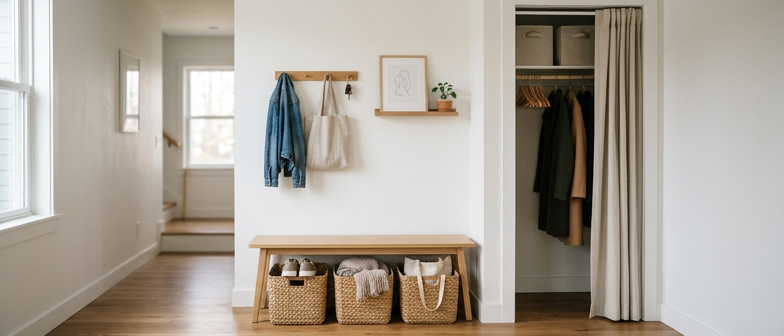
Minimalist home organization starts the moment you step inside, so the entryway needs simple, reliable storage instead of a pile of shoes and dropped mail. Smart entryway storage systems give every common item a clear landing spot that is easy to see and use. A narrow bench with hidden compartments can hold shoes and bags while offering a place to sit, and a slim console with shallow drawers can collect keys, sunglasses, and incoming envelopes without feeling bulky. Wall hooks, a small rack for outerwear, and a compact tray for pocket items work together to reduce visual noise, so you notice clean lines instead of scattered belongings when you arrive home.
To keep this zone calm, pair the setup with consistent clutter prevention habits. Create a short arrival routine where you hang your bag, place mail in one inbox, and return shoes to the same spot instead of leaving them in the hallway. Limit what you store by keeping only in-season coats and everyday footwear near the door, moving the rest elsewhere so the space does not overfill. End each day with a one-minute reset, checking the floor, bench, and hooks for items that wandered in but belong in another room, so the entry stays orderly from the first step inside.
Creating an Entryway Landing Zone
Minimalist home organization starts at the front door with a compact landing zone that keeps daily essentials contained. Choose a simple entryway storage system with hooks for keys and bags, a slim tray for mail, and a small bench or mat to mark where shoes come off. Keeping storage to this tight area creates a clear boundary so bags, papers, and packages have a set destination instead of spilling into nearby rooms.
Support this setup with consistent clutter prevention habits. Hang bags as soon as you arrive, drop keys in the same dish, and sort mail into keep, recycle, or action within a few minutes. Treat full hooks, trays, or the shoe spot as a signal to put things away elsewhere rather than adding more storage, so the entry stays calm and the rest of the home remains clear.
Kitchen Drawer Organization and Open Shelf Styling
In minimalist home organization, kitchen drawer organization keeps routines calm by cutting visual and mental clutter. Group tools by task, such as prep, cooking, and serving, so each drawer has a clear purpose instead of becoming a catchall. Use simple dividers or shallow trays to separate utensils, measuring tools, and small gadgets, keeping only the versions you actually use. When every item has a defined spot, you can see what you need at a glance and avoid buildup of extras.
Once drawers are streamlined, extend the same clarity to open shelf styling. Treat shelves as both storage and decor, giving priority to frequently used items like everyday dishes or glassware and stacking them in neat, repeatable ways. Limit the color palette, and mix closed containers with a few lighter elements, such as a plant or a single serving bowl, so the arrangement looks consistent without feeling crowded while keeping daily essentials within reach.
To maintain this balance, use simple decluttering decision rules whenever a new utensil or dish arrives, such as letting something go if a similar item already fills that function. Check drawers and shelves seasonally, removing tools you have not used recently and returning things to their zones. By pairing a thoughtful layout inside drawers with intentional styling on open shelves, the kitchen stays functional and understated without demanding constant effort.
Q&A
What does minimalist home organization actually aim to achieve?
It aims to align your belongings with how you live day to day, prioritizing clear surfaces, reliable storage, and smooth routines over having the fewest items possible.How can I plan a small apartment layout that still feels minimalist?
Define one main purpose for each area, such as sleeping, working, or eating, then choose only the furniture and storage that support that single function.What makes an entryway storage system effective in a minimalist home?
It gives every everyday item a visible, easy landing spot—hooks for bags, a tray for keys and mail, and a small bench or shoe zone—to keep clutter from spreading indoors.How should I organize kitchen drawers while keeping shelves visually calm?
Group drawer contents by task and limit each category to what you truly use, then keep open shelves for frequently used, visually simple items like plain dishes or glass jars.What decluttering decision rules help prevent clutter from returning?
Use simple rules such as one-in-one-out for categories, setting caps on how many similar items you keep, and scheduling short weekly checks of high-traffic zones.