
Balcony gardening for beginners can turn a small, windy space into a practical container garden by matching sunlight patterns, plant choices, and pot placement. This guide walks you through sunlight mapping basics, low maintenance plant combinations, simple watering schedule ideas, and planning small, steady harvests.
Understanding Your Balcony Space
In balcony gardening for beginners, the first step is to understand what your space naturally offers before choosing any containers or seeds. Spend a few days doing basic sunlight mapping, watching how light changes in the morning, midday, and late afternoon. Note which spots get direct sun, which stay in bright shade, and how long each area keeps that light, because many edible plants need several hours of steady sun while some foliage choices manage with less. As you observe, also notice how wind behaves, especially on higher floors or corner balconies where gusts can quickly dry potting mix or knock around taller plants. This simple assessment helps you place each plant in a suitable position and encourages realistic small space planting instead of crowding every corner.
Once you know your balcony’s conditions, you can make practical decisions about what and how much to grow. Think about how much weight the structure can handle and choose lightweight containers and potting mix rather than heavy garden soil or oversized planters. Plan how you move through the area so you keep clear paths and easy access for watering, pruning, and harvesting later in the season. When you arrange your container garden setup, imagine where a chair, small table, or storage bin might fit so the space still feels comfortable to use. By matching your layout to the limits of your balcony, you create a manageable garden that supports healthy plants and a routine you can stick with.
| Checklist Item | What To Notice | Impact On Plant Choices | Suggested Action |
|---|---|---|---|
| Daily sunlight pattern | Morning vs midday vs late light | Select sun or shade tolerant plants | Mark zones as full sun, partial, shade |
| Wind exposure | Gusts, constant breeze, calm spots | Choose sturdier or compact varieties | Use screens or place tall pots near walls |
| Access to water | Distance to faucet or watering can route | Affects how often you can water | Plan clear path and central watering spot |
| Available floor and railing space | Walkway width and rail height | Limits container size and number | Reserve edges for slim or vertical planters |
| Weight and structural limits | Balcony age, material, visible flex | Influences potting mix and container type | Favor lightweight pots and soil-less mixes |
| Comfort and usability | Room for chair or small table | Balances garden size with livability | Keep one main area open for seating |
Sunlight mapping and microclimates
To begin sunlight mapping for balcony gardening, watch your space at morning, midday, and late afternoon on clear days. Note where there is direct sun, bright shade, and full shade, and how many hours each section receives light. Quick photos or simple sketches help you mark areas blocked by railings, walls, buildings, or trees and decide which spots can host sun-loving plants and which suit herbs or foliage that prefer softer light.
As you build this basic record, also notice microclimates on your balcony. Corners near walls often trap heat and may suit drought-tolerant choices, while windy edges can dry pots quickly and need tougher plants. Sheltered zones under overhangs stay drier and protect leaves from heavy rain. Combining these observations lets beginners place containers where they are most likely to thrive.
Planning a Container Garden Setup
When you plan a container garden on a balcony, start by matching pots to the space you truly have. Measure the floor, railings, and any ledges so containers do not block doors, walkways, or exits. Choose sturdy containers with drainage holes and lightweight materials like resin or fabric grow bags if weight is a concern. Think about how you move through this small space and place pots where you can water and harvest easily without stretching over railings or dragging heavy planters.
For a healthy container garden setup, the potting mix matters more than how the pots look. Use a high quality mix labeled for containers instead of garden soil, which is usually too dense and slow to drain. A loose, airy mix gives roots oxygen and helps prevent waterlogging, which matters in small space planting where pots can swing quickly between very dry and too wet. You can blend in compost for nutrients or perlite to improve drainage, but keep the texture light so water moves through and roots can spread.
Once you have your containers and potting mix, plan a layout that suits both the plants and your daily routine. Group pots with similar sun and water needs so care stays simple. Place taller containers along the back or at the railing and shorter ones in front so each plant receives light and air. If the balcony is very tight, use vertical stands or shelves to stack pots safely while leaving enough room to stand, turn, and carry a watering can without bumping into your container garden.
Making the most of limited space
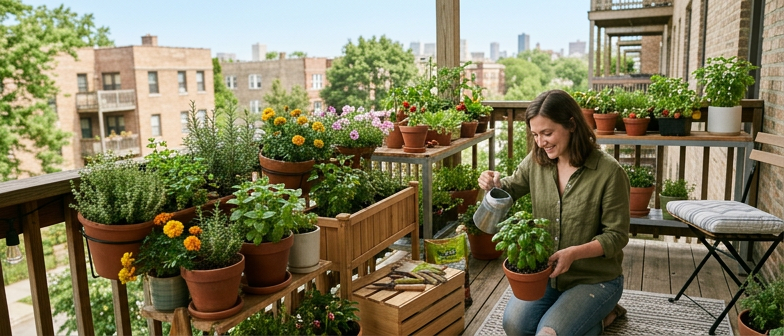
In balcony gardening for beginners, treat the floor, walls, and railings as separate zones in your container garden setup. Place the largest, heaviest pots near a wall or corner for stability and keep a clear path for safe watering and harvesting. Group plants that share sunlight and watering needs, and use rectangular planters or narrow troughs along the edges instead of many small pots so the layout stays tidy and easy to walk through.
For small space planting, build upward instead of filling the floor. Simple shelves, step-style stands, and railing planters let herbs, greens, and flowers grow at different levels without blocking movement. Hanging baskets can hold trailing plants or light edibles, and a slim trellis behind one or two containers lets climbers grow vertically. Always respect weight limits, secure vertical pieces, and leave gaps for air and light so the balcony garden stays healthy.
Choosing Low Maintenance Plants
For anyone starting balcony gardening for beginners, choosing low maintenance plants is one of the most important decisions you can make. A balcony is a small, often windy and exposed space, so plants that tolerate stress and recover quickly are safer than delicate varieties. Focus on how much sun your balcony receives, how hot it gets, and how often you realistically want to water. When you match plant toughness to your routine, a container garden setup stays manageable and suits a small space planting style.
Herbs and vegetables that handle tight spaces are ideal for new gardeners. Sturdy herbs like rosemary, thyme, chives, mint grown in its own pot, and oregano adapt well to containers and do not demand constant attention once established. For edible crops, compact peppers, container-bred bush tomatoes, and cut-and-come-again lettuces can work well if they fit your light conditions and receive steady watering. Simple harvest planning, such as sowing a small number of seeds every couple of weeks, spreads out harvests and keeps your balcony from feeling overcrowded.
Ornamental choices can also be simple and forgiving when you want an easy-care balcony garden. Look for flowering plants marked for pots and drought tolerance, such as many geraniums, marigolds, or dwarf zinnias, which cope with warm, bright balconies and brief dry spells better than thirstier species. Pair these with compact foliage plants or trailing vines that fill gaps without heavy maintenance. By starting with a modest mix of herbs, a few compact vegetables, and resilient ornamentals, you keep your balcony gardening project satisfying instead of overwhelming.
Starter plant combinations for beginners
For a first balcony garden, focus on simple, low maintenance plants with similar needs. An easy starter mix is a herb container with basil, parsley, and chives, which all like steady moisture and moderate sun. Another reliable small space planting idea is a compact cherry tomato with trailing thyme or oregano at the base, giving you both height and a living groundcover in one pot while you practice basic care.
If you prefer mostly foliage, combine a dwarf ornamental grass with hardy succulents or a small shrub-like rosemary, which stay presentable even if you miss an occasional watering. For softer color, pair a compact flowering plant such as marigold or calibrachoa with trailing ivy or sweet potato vine, using container-friendly varieties that share the same light level so your first balcony garden feels tidy and manageable.
Q&A
How do I start balcony gardening as a complete beginner?
Begin by observing your balcony for a few days. Note how much sun, shade, and wind it gets, then choose a few sturdy containers and a short list of easy plants instead of filling every corner at once.What should I consider when setting up containers on a small balcony?
Measure the space, keep doors and walkways clear, and place heavier pots near walls or corners. Use containers with drainage and group pots where you can water and harvest without reaching dangerously over the railing.Which low maintenance plants work well in a balcony garden?
Herbs like parsley, chives, and thyme, compact cherry tomatoes, salad greens, and tough flowering plants such as marigolds are good options, provided you match them to your balcony’s light and temperature.How can I map sunlight and microclimates on my balcony?
Check the balcony morning, midday, and late afternoon on clear days. Mark spots with direct sun, bright shade, and full shade, and note windy corners or areas sheltered by walls or railings.How do I create a simple watering and harvest plan?
Aim for a regular schedule, such as checking soil moisture once daily in warm weather. Water deeply when the top few centimeters feel dry and plan small, frequent harvests so plants keep producing new growth.