
If you struggle to keep houseplants thriving, a simple indoor plant care routine can turn guesswork into steady progress. This guide shows how to read watering signals, set up pot drainage, rotate for light, clean leaves, and adjust a plant care calendar as seasons change.
Understanding Your Indoor Plant Care Routine
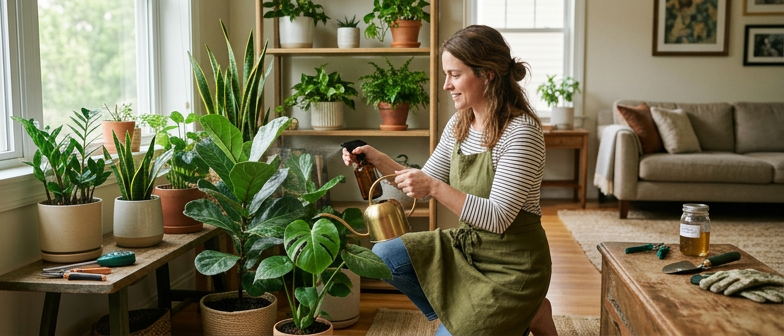
An indoor plant care routine works best when it is simple, predictable, and tailored to the plants you actually own. Instead of trying to remember every detail for each species, think in terms of recurring tasks, like checking soil moisture, rotating pots for even light, and giving plants a quick visual inspection. A basic plant care calendar can help you turn these small actions into habits, whether you prefer a paper planner, a digital reminder, or a note on your fridge. Over time, this structure makes it easier to notice patterns, such as which plants dry out faster or which ones need extra light near a window.
Because different houseplants have different needs, any indoor plant care routine should be treated as a flexible framework rather than a strict rulebook. Start with broad guidelines for watering, light, and cleaning, then adjust based on how each plant responds. Record simple observations in your personal plant care calendar, such as new growth, drooping leaves, or changes in color, and use those notes to fine-tune your schedule. By regularly observing and making small adjustments, you build a sustainable routine that supports healthy growth without becoming overwhelming.
Watering Signals and Pot Drainage Basics
A reliable indoor plant care routine starts with learning how to read watering signals instead of following a fixed schedule. Check the top inch of soil and the weight of the pot; dry soil and a lighter container usually mean it is time to water. Many plants also show subtle cues, such as mild leaf drooping or slightly dull foliage, when they are thirsty. Because overwatered plants can look similar, combine touch and visual checks so you do not rely on a single sign.
To avoid overwatering, focus on how water moves through the pot rather than how often you water. Pour slowly and evenly until moisture reaches the roots, then let extra water drain instead of leaving the plant in a saucer full of runoff. If soil stays wet for days, roots lose access to oxygen and can decline even while the leaves look green. Build a simple habit of checking soil moisture, noticing how long it takes to dry, and adjusting the amount of water as room temperature, humidity, and plant size change.
Good pot drainage is a basic requirement for healthy roots in any indoor plant care routine. Containers need at least one open drainage hole so excess water can escape, and the potting mix should stay loose enough for water to flow through instead of pooling around the roots. Using a saucer or decorative cover pot is fine if you empty standing water and avoid sealing the bottom. When water can move freely out of the pot, roots receive both moisture and air, and your watering habits become more forgiving across different seasons.
| Checklist Item | What To Look For | Likely Issue | Suggested Action |
|---|---|---|---|
| Top soil feel | Dry, crumbly surface | Possible underwatering | Water thoroughly, then recheck in a few days |
| Pot weight | Noticeably lighter than usual | Soil moisture low | Add water slowly until pot feels evenly heavier |
| Leaf posture | Mild droop with dry soil | Thirsty plant | Water once and observe recovery before adjusting routine |
| Leaf color and soil | Yellowing leaves with wet mix | Possible overwatering | Pause watering, improve airflow and monitor drainage |
| Drainage hole check | Water pooling or no outflow | Poor pot drainage | Confirm open holes, loosen mix, empty saucer promptly |
| Dry-down time | Soil stays wet for long period | Roots lacking air | Use less water per session and check potting mix structure |
Recognizing When and How Much to Water
A consistent indoor plant care routine starts with reading watering signals instead of following a fixed calendar. Lightly press your finger into the potting mix; when the top inch feels dry and crumbly rather than cool and slightly damp, many houseplants are ready for water. You can also lift the pot to feel if the soil is light and dry or heavier and still moist, and glance at the surface for soil pulling away from the pot edges, which suggests it has been dry for a while.
Leaves also reveal how much and how often to water. Slight drooping with dry soil usually points to underwatering, while soft, yellowing foliage and consistently wet mix suggest too much moisture. When you water, pour slowly until a little drains from the bottom, then let the excess run off so roots are not left in a soggy pot. Over time, watch how long it takes the soil to dry again and adjust your pattern into a flexible rhythm instead of a rigid schedule.
Setting Up and Checking Pot Drainage
Good pot drainage is essential for a reliable indoor plant care routine. Use containers with clear drainage holes so extra water can escape, and place a saucer underneath to protect surfaces. Empty any standing water within about fifteen minutes so the soil can breathe. If you like decorative cachepots without holes, keep the plant in a plain nursery pot with openings and slip it inside, leaving space at the bottom so runoff does not sit around the roots.
Add a quick drainage check to your regular plant care calendar. After watering, confirm that some moisture reaches the saucer; if the surface looks wet but nothing comes out, the pathway may be blocked by compacted mix or old roots. Gently loosen the top layer of potting medium and make sure the holes are not sealed by salt deposits or debris, so water can flow and the root system stays healthy.
Light Exposure Rotation and Leaf Cleaning Habits
Light exposure rotation is a simple habit that keeps indoor plants growing evenly instead of leaning toward a window or lamp. As part of a consistent indoor plant care routine, turning the pot a quarter turn every week or two spreads light more evenly across the foliage. This regular rotation encourages balanced stems, reduces weak, stretched growth, and helps plants use available light more efficiently without special equipment.
Match your rotation schedule to tasks you already do, such as watering or checking the soil, so it feels automatic. Watch how each plant responds, since some prefer bright, indirect light while others tolerate lower levels and may need slower changes in their position. Over time, this steady pattern of rotating and observing shows you how much light each plant prefers and lets you adjust placement before pale leaves or leggy growth become serious problems.
A regular leaf cleaning habit supports both light management and overall health by keeping dust, pet hair, and other buildup off the foliage. Wiping leaves gently with a soft, slightly damp cloth improves photosynthesis, makes pests or spots easier to see, and keeps your space looking tidy. Many people tie leaf cleaning into their plant care calendar on a set day each month, creating a predictable routine that supports long‑term growth, reduces minor pest issues, and keeps indoor plants more resilient to everyday changes.
Creating a Simple Leaf Cleaning Habit
A simple leaf cleaning habit keeps your indoor plant care routine easy while helping plants use light efficiently. Dust and cooking residue can block sunlight, so wipe leaves every few weeks when you already water or check soil moisture. Use a soft, slightly damp cloth or microfiber towel, supporting each leaf with your hand as you wipe to avoid damage. Skip harsh cleaners and shiny sprays; plain water is usually enough and gentler on foliage. For plants with many small leaves, a light rinse in the sink or shower on a soft spray can replace wiping, as long as pots drain well and leaves dry in a bright, indirect spot afterward.
Q&A
What is a simple indoor plant care routine for beginners?
Once or twice a week, check soil with your finger, scan leaves for spots or pests, give the pot a small turn for even light, and jot quick notes in a plant care calendar to spot patterns.
How can I read watering signals instead of using a strict schedule?
Press the top inch of soil, lift the pot to feel weight, and watch for slight leaf droop. Water thoroughly when the mix feels dry but not rock hard and the pot feels lighter.
What are the basics of good pot drainage indoors?
Use pots with drainage holes and a saucer, and dump extra water after about fifteen minutes. With a decorative cover pot, keep the plant in a holed inner pot so runoff does not sit at the roots.
Why rotate plants for light and keep leaves clean?
Turning pots a quarter turn every week or two prevents leaning, and gently wiping dusty leaves or rinsing them helps them capture light efficiently.
How do I adjust my routine for seasonal growth changes?
Use your care calendar to mark slower growth in cooler, darker months and faster growth in brighter seasons so you can water less in winter and gradually increase water and light as days lengthen.