
Turn a spare corner into a calm reading nook by combining supportive seating, well-placed natural and lamp light, and compact shelves for a personal book display. Learn how to arrange a quiet, practical spot that keeps your favorite reads, cushions, and essentials comfortably within reach.
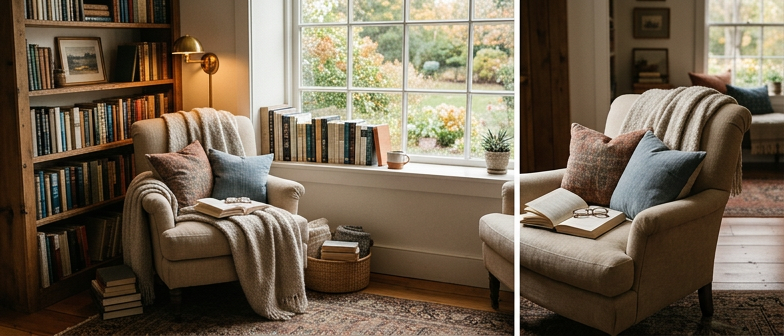
What Makes a Reading Nook Work
A successful reading nook design starts with creating a small, defined place where your body and mind can relax. Instead of planning a full room makeover, focus on a quiet corner setup that feels separate from daily traffic, even if it is just the end of a sofa or a spare bit of hallway. The most effective spaces balance comfort, a sense of privacy, and basic practicality, so you can sit down, reach for a book, and stay put without constantly adjusting the chair, the light, or your surroundings.
Comfortable seating, supportive cushions, and steady natural light usually form the core of this kind of space, but there is no single layout that works for every home. Some people build their nook around a sunny window, while others tuck it into a calm corner with a floor lamp and a small shelf for current reads. When you see reading nook design as a flexible framework rather than a strict formula, it becomes easier to adapt these ideas to apartments, shared living rooms, or multipurpose bedrooms while still protecting a sense of calm and focus.
Choosing the Right Spot and Layout
A successful reading nook design starts with choosing a place where you can actually relax and focus. Look for a quiet corner that feels separate from busy areas like the TV, kitchen traffic, or play spaces. Even in a studio or open floor plan, you can claim a small zone by tucking a chair beside a wall, near a window, or at the end of a hallway. The aim of this quiet corner setup is to reduce noise and visual distractions so the space clearly signals that it is meant for reading and unwinding.
Natural light placement makes a big difference in how inviting your nook feels and how well you can see the page. Position seating so daylight comes from the side or just behind your shoulder rather than straight into your eyes or directly behind you, which can cause glare or shadows on your book. If your room has only one window, angle the chair and a small table to catch that light without blocking pathways. When windows are limited, keep the basics of good reading nook design by pairing whatever daylight you have with a well-placed lamp until the light feels balanced and comfortable.
Once you choose the location, think about the layout for both comfort and movement. Start with a comfortable chair or compact lounger, then place a small surface within easy reach for a book, glasses, or a drink. Leave enough floor space so it is easy to enter and exit without bumping into walls or other furniture, especially in narrow or multipurpose rooms. In larger spaces, you can define the nook by centering the chair on a rug or aligning it with a nearby bookshelf so the arrangement looks intentional and calm.
| Home Layout Scenario | Suggested Nook Location | Natural Light Use | Layout Focus |
|---|---|---|---|
| Small studio apartment | Chair beside windowed wall | Side daylight with lamp backup | Compact chair and slim table |
| Open-plan living room | End of sofa or corner by rug | Filtered light from large window | Clear path between zones |
| Long hallway or landing | Chair at wider end of corridor | Borrowed light from nearby window | Shallow footprint, wall-hugging pieces |
| Bedroom retreat | Corner opposite bed | Soft light from bedside window | Cozy chair with small surface |
| Large multipurpose family room | Corner near bookshelf | Balanced light from side window | Rug-defined nook with open entry |
Making the Most of Natural Light
When you plan your reading nook design, watch how daylight moves through the room and place your chair or bench near a window where the light is bright but gentle. Sit where daylight falls over your shoulder instead of straight into your eyes, so you can read clearly without squinting. If the sun is harsh, soften it with sheer curtains, blinds, or a light-filtering shade to reduce glare and protect both your eyes and your books.
Balance natural light placement with privacy and quiet so the nook feels calm as well as bright. A corner slightly away from the main window can still borrow daylight while shielding you from street views and busy household areas. Pair this window light with a simple reading lamp so you have steady illumination as the sun moves, keeping the space comfortable from morning to evening.
Comfortable Seating and Supportive Surfaces
Thoughtful Reading Nook Design starts with how your body feels after half an hour, not just how the space looks. Comfortable seating choices should support your back, hips, and legs so you can settle in without strain. Chairs with a slight recline, padded armrests, and a firm but cushioned seat let you change positions while keeping your spine aligned. If you prefer a compact setup, an upholstered accent chair or a small loveseat gives you room to shift posture without overwhelming the room.
Built-in benches and window seats become inviting when you treat them as supportive surfaces instead of a single flat pad. A simple bench feels better with layered cushions of different densities, such as a firm base and softer pillows along the back. In narrow areas, a deep window seat with a cushion and a few lumbar pillows can offer the comfort of a lounge chair while using less floor space, keeping your reading nook open instead of cramped.
For flexible layouts, floor cushions, poufs, or a low chaise let you stretch out while still maintaining healthy support. Choose seating that keeps your knees close to hip level and your neck in a neutral position if you read for long sessions. Small adjustments, like adding an ottoman for leg support or a side table to keep books within reach, reduce strain and make your reading corner a place you return to often.
Side Tables, Footrests, and Small-Space Hacks
Side tables and footrests help a compact reading nook feel complete. When you choose comfortable seating, pair it with a slim table that tucks beside or behind the chair to hold a mug, a book, or a reading lamp without blocking movement. Nesting tables and C shaped designs slide partly under the seat, keeping surfaces close while the floor stays open so the corner feels lighter.
In very small spaces, pick pieces that blend storage and comfort so the nook stays organized. A padded ottoman can act as both footrest and hidden bin for blankets, and a low stool can support your legs or briefly hold a stack of titles. Shallow wall mounted ledges or a narrow ladder style unit create a simple small shelf arrangement for current reads and notebooks, keeping essentials near the chair instead of spreading into a full bookcase wall.
Lighting and Storage for Everyday Use
Thoughtful artificial lighting is essential to any practical reading nook design once natural light fades. When choosing a reading lamp, focus on fixtures with focused, adjustable beams so the light falls on the page, not in your eyes. Table lamps with opaque shades, swing-arm wall lamps, or floor lamps with pivoting heads help reduce glare while giving you enough brightness to read comfortably. Position the light slightly behind and to the side of your shoulder to limit shadows and eye strain during longer reading sessions.
Storage should keep books and accessories close without overwhelming a small corner. A compact, small shelf arrangement planned vertically frees floor space while keeping current reads and reference materials within reach. Shallow wall shelves, narrow bookcases, or a short stack of floating ledges let you mix books and a few decorative pieces without visual clutter. Group items by height or color and leave some open space on each shelf so the nook feels calm rather than crowded.
Everyday use also means planning for small essentials beyond books. Build your reading nook design around a simple setup where a side table, basket, or low shelf holds reading glasses, notebooks, and a blanket. Keeping storage within arm’s reach lets you settle in without getting up repeatedly, while still preventing the corner from becoming a catch-all. By pairing a well-placed reading lamp with streamlined shelves and a few organized accessories, the space stays both functional and inviting.
Q&A
What makes a reading nook design feel relaxing rather than just decorative?
Choose a small, low‑traffic spot, use a seat that supports your back, and keep a side table or basket nearby so books and blankets stay within easy reach.
How can I set up a quiet corner in a busy living room?
Move away from the TV and main paths, tuck the chair by a window or sofa end, and angle it slightly inward so the corner feels like its own little zone.
How do I use natural light without getting glare while I read?
Place your chair so light falls over one shoulder instead of into your eyes, and add sheer curtains or blinds to soften strong sunlight.
What seating works best for long reading sessions in a small nook?
Pick a compact upholstered chair or loveseat with a gentle recline, firm cushions, and armrests, then add a small footstool if you like to stretch out.
How should I arrange a reading lamp, shelf, and personal book display in a tight space?
Use a slim floor or wall‑mounted lamp aimed at your pages, and pair it with narrow or floating shelves so favorite books stay close without cluttering the floor.