
Navigating daily commutes and weekend escapes requires the right vehicle to keep everyone comfortable and safe. Families today find themselves drawn to certain models that seem to combine spacious interiors with essential modern safety features, ensuring enjoyable journeys for both the young and the young-at-heart.
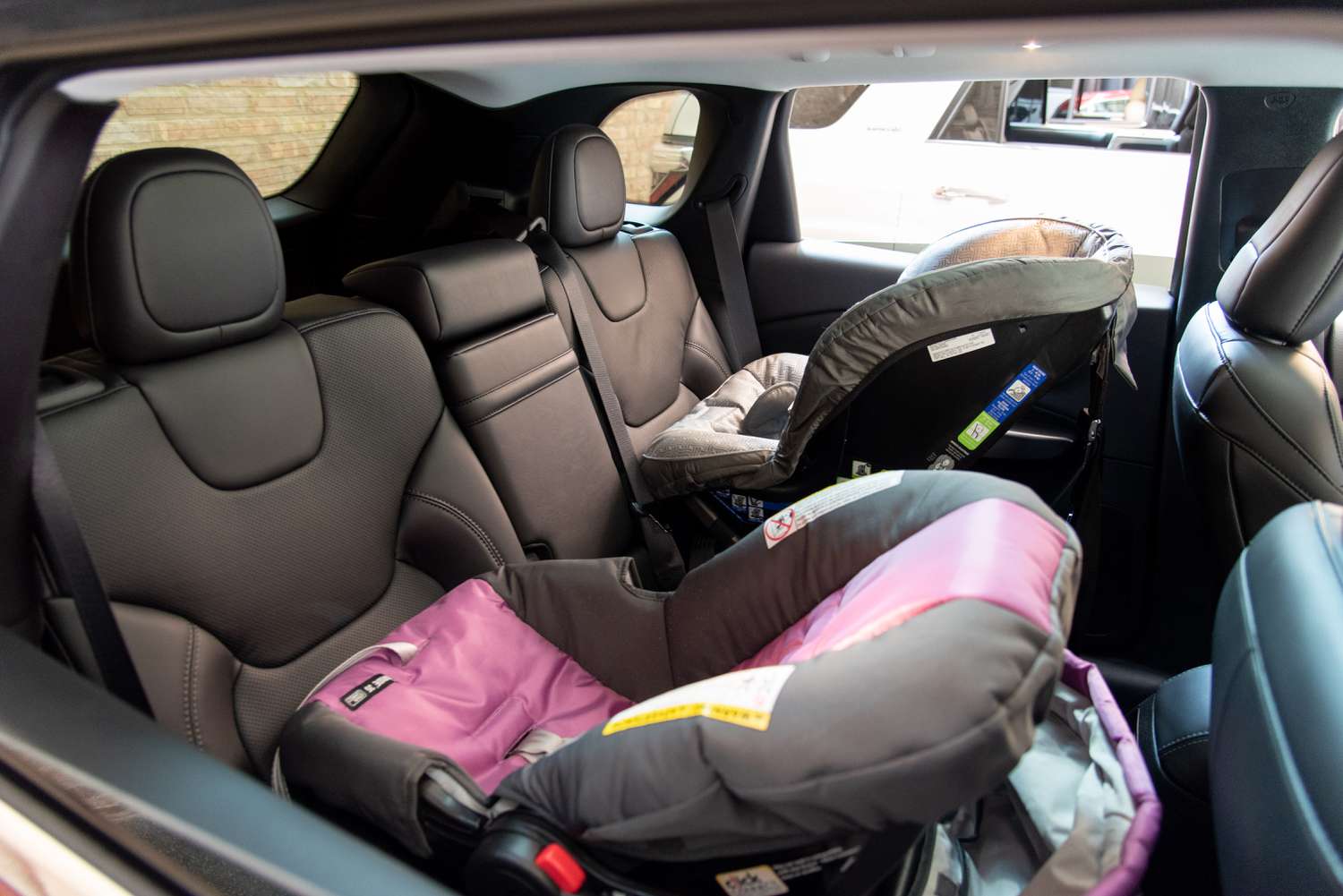
Navigating daily commutes and weekend escapes requires the right vehicle to keep everyone comfortable and safe. Families today find themselves drawn to certain models that seem to combine spacious interiors with essential modern safety features, ensuring enjoyable journeys for both the young and the young-at-heart.
Mastering Interior Space and Passenger Comfort
Flexible Seating Arrangements for Growing Broods
When selecting a vehicle for household duty, the configuration of the interior is often just as critical as the exterior dimensions. Modern three-row vehicles have moved beyond simply cramming as many seats as possible into a cabin; the focus has shifted towards intelligent space management that adapts to daily needs. A prime example of this evolution is the availability of second-row captain’s chairs versus traditional bench seating. Opting for independent captain's chairs creates a distinct separation between siblings, significantly reducing the "he's touching me" arguments during long drives. It also provides a central aisle, allowing children to access the third row without needing to tumble a heavy seat forward, a feature that parents of multiple active children find invaluable.
Beyond the layout, the mechanics of the seats themselves play a pivotal role in daily convenience. For families with toddlers, the ease of accessing LATCH or ISOFIX anchors can turn a frustrating struggle into a ten-second task. A wide door aperture and high hip point save parents from back strain when buckling in a sleeping child. Furthermore, sliding second-row seats are a standout feature in contemporary designs. Being able to slide a seat forward to bring a baby closer to the front row, or backward to give a teenager more legroom, allows the vehicle to physically adapt as the family grows. This adaptability transforms the car from a mere transport vessel into a dynamic living space that accommodates everything from car seats to varsity sports gear.
| Seating Configuration | Ideal Scenario | Primary Advantage | Trade-off |
|---|---|---|---|
| Second-Row Bench | Families needing maximum passenger capacity (up to 8). | Creates a flat barrier for cargo when folded; allows an adult to sit next to a child seat. | Access to the third row often requires tilting the entire seat; less personal space. |
| Captain's Chairs | Families prioritizing comfort and ease of access. | Provides individual armrests and a "walk-through" aisle to the third row. | Reduces total passenger capacity by one; creates a gap where cargo can slide forward. |
Amenities That Define Modern Family Travel
Gone are the days when comfort features were reserved exclusively for the driver and front passenger. In the latest family-focused models, designers have democratized comfort, ensuring that occupants in the second and third rows are treated with equal consideration. Tri-zone automatic climate control has become a standard expectation rather than a luxury, allowing those in the back to set their own temperature preferences. This is particularly crucial during extreme weather; adequate ventilation in the rear prevents motion sickness and keeps children comfortable, which directly correlates to a quieter, less stressful drive for the operator. Some high-end trims even extend heated seats and sunshades to the rear, shielding little ones from harsh glare during midday naps.
Connectivity is another pillar of modern passenger satisfaction. With the proliferation of tablets and handheld gaming devices, the "battery anxiety" of passengers can quickly derail a peaceful road trip. Manufacturers have responded by scattering USB charging ports throughout the cabin, often ensuring that even third-row passengers have dedicated power sources. Coupled with thoughtful storage solutions—such as tiered door pockets, designated smartphone slots, and oversized cupholders capable of holding large water bottles—the cabin remains organized. Additionally, acoustic engineering has improved drastically. The use of laminated acoustic glass and active noise cancellation creates a serene environment where conversation can flow easily from the front to the back without the need to shout over wind or tire noise.
Prioritizing Protection on Every Journey
The Foundation of Crash Protection and Structural Integrity
When a vehicle is tasked with carrying a family's most precious cargo, the fundamental structural integrity takes precedence over any aesthetic feature. The automotive industry has seen a rigorous evolution in crash safety standards, pushed forward by independent testing agencies that now simulate increasingly complex accident scenarios. It is no longer enough to withstand a head-on collision; modern chassis designs must effectively absorb and dissipate energy during offset frontal impacts and side collisions to minimize intrusion into the passenger cell. For families, researching these independent crash test ratings is the first and most critical step in the purchasing journey.
Specifically for three-row vehicles, the coverage of airbags is a detail that warrants close inspection. While front airbags are standard, a truly safe family hauler ensures that side-curtain airbags extend all the way to the C-pillar, protecting the heads of passengers in the very last row. This "shield of air" is vital, as the third row is often occupied by children. Furthermore, the rigidity of the body structure contributes not just to crash safety but to daily driving stability. A stiffer chassis handles sudden evasion maneuvers more predictably, preventing body roll that could unsettle the vehicle. Ultimately, the peace of mind that comes from driving a vehicle engineered with a reinforced safety cage is intangible but invaluable, serving as the silent guardian on every school run or holiday trek.
Active Driver Assistance as a Co-Pilot
While passive safety protects during an accident, active safety technology aims to prevent the incident entirely. The integration of advanced driver-assistance systems (ADAS) has transformed the driving experience from a solitary task into a supported one. Features such as Automatic Emergency Braking (AEB) with pedestrian detection act as an extra set of eyes, reacting faster than human reflexes to sudden obstructions—a scenario all too common in busy suburban neighborhoods. Blind-spot monitoring is equally indispensable in larger vehicles, alerting drivers to unseen traffic before a lane change is attempted, effectively neutralizing the inherent blind spots of a substantial SUV.
For long-distance travel, technologies like Adaptive Cruise Control and Lane Centering Assist significantly reduce driver fatigue. By automatically maintaining a safe distance from the car ahead and providing gentle steering inputs to stay in the lane, these systems allow the parent behind the wheel to remain fresher and more alert over hundreds of miles. However, safety is also about visibility in static situations. High-definition 360-degree camera systems have revolutionized parking maneuvers. By offering a bird's-eye view of the vehicle, drivers can spot wandering toddlers, stray bicycles, or low bollards that would otherwise be invisible below the window line. These technologies do not replace attentive driving, but they provide a crucial safety net that compensates for the distractions inherent in family life.
Balancing Performance with Practicality
Cargo Solutions for Active Lifestyles
The equation of "passenger space versus cargo capacity" is the most common dilemma for SUV buyers. In a three-row configuration, utilizing every seat often compromises trunk space, leaving little room for anything beyond a few grocery bags. However, the versatility of modern interiors allows for dynamic solutions. The key lies in the ease of transformation. The best vehicles feature seats that fold completely flat into the floor with a simple pull of a strap or push of a button. This flat load floor is essential for sliding in bulky items like strollers, camping coolers, or flat-pack furniture without obstruction.
For families with an adventurous spirit, the utility must extend beyond the carpeted boot. Manufacturers increasingly equip these vehicles with durable, easy-to-clean materials. Reversible cargo mats with a rubberized side are a boon for muddy sports cleats or wet swimwear, allowing for a quick wipe-down rather than a deep steam clean. When the interior capacity is maxed out, the roof becomes the next frontier. Sturdy roof rails are a necessity for mounting cargo boxes, kayak racks, or bike carriers, effectively doubling the vehicle's carrying capacity. By moving bulky but lightweight gear to the roof, the interior remains spacious for passengers, ensuring that a fully loaded car doesn't feel claustrophobic.
| Powertrain Type | Driving Characteristic | Best Fit For |
|---|---|---|
| Traditional Gasoline (V6/Turbo) | Consistent power delivery; high towing capacity for boats or trailers. | Families who frequently tow heavy loads or live in areas with limited charging infrastructure. |
| Plug-in Hybrid (PHEV) | Silent electric-only mode for short trips; gas engine for long range. | Suburban families with driveway charging who want to eliminate gas use for daily school/sports runs. |
Efficiency Meets Power: The Hybrid Advantage
The landscape of family motoring is shifting rapidly towards electrification, specifically through Plug-in Hybrid Electric Vehicles (PHEVs). This powertrain technology offers a pragmatic "best of both worlds" solution for households. For the majority of the week—comprising school drop-offs, grocery runs, and local errands—a PHEV can operate entirely on electric power. This not only drastically reduces fuel costs but also offers a silent, vibration-free ride that is perfect for neighborhood driving. It allows families to contribute to local air quality improvements without altering their daily routines significantly.
However, the "hybrid" aspect eliminates the range anxiety associated with pure electric vehicles. When the weekend arrives and the itinerary calls for a cross-country road trip to visit grandparents or a national park, the gasoline engine seamlessly takes over, providing hundreds of miles of uninterrupted range. Furthermore, electrification often boosts performance. The instant torque provided by electric motors helps heavy vehicles accelerate smoothly from a stop, making merging onto highways effortless even when fully loaded with passengers and luggage. This combination of economic daily operation and unrestricted weekend freedom makes the electrified SUV a highly logical choice for the multifaceted demands of modern parenting.
Q&A
What makes SUVs suitable for family use compared to other vehicle types?
SUVs are particularly well-suited for family use due to their spacious interiors, which comfortably accommodate multiple passengers and offer ample legroom. They often come with advanced safety features, which are a priority for families, and provide a higher driving position that enhances visibility. Additionally, SUVs usually have more flexible seating arrangements and larger cargo areas, catering to the varied needs of a family, such as carrying strollers or sports equipment.
How do SUVs accommodate child seats and ensure the safety of young passengers?
Many SUVs are equipped with LATCH (Lower Anchors and Tethers for Children) systems, which make it easier to securely install child seats. The spacious back seats in SUVs provide sufficient room to comfortably fit child seats without compromising the space for other passengers. Moreover, SUVs often come with rear-seat reminders and advanced airbag systems that enhance the safety of young passengers.
Why are SUVs considered convenient for school runs and everyday use?
SUVs offer everyday convenience for tasks like school runs due to their easy ingress and egress, which is beneficial for children. The elevated seating position provides better road visibility, making it easier to navigate through traffic during busy mornings. The ample storage space allows for carrying school bags, sports gear, and other essentials, making them an ideal choice for daily family logistics.
What makes SUVs a good choice for road trips with family?
For road trips, SUVs provide comfortable seating for long distances and sufficient storage space for luggage and travel gear. Their robust construction and often enhanced suspension systems provide a smoother ride on various terrains. Additionally, many SUVs come with entertainment systems and multiple charging ports, keeping passengers engaged and devices powered during long journeys.
How do SUVs address storage needs for families?
SUVs typically offer significant storage space, both in the trunk and through foldable seats, allowing families to transport large items or groceries with ease. The versatile storage options, such as roof racks and under-floor compartments, further enhance their utility, making them well-suited for families with diverse storage needs, from camping equipment to bulk shopping.